The Tortoise Trainer: Osman Hamdi Bey’s Icon of Ottoman Change
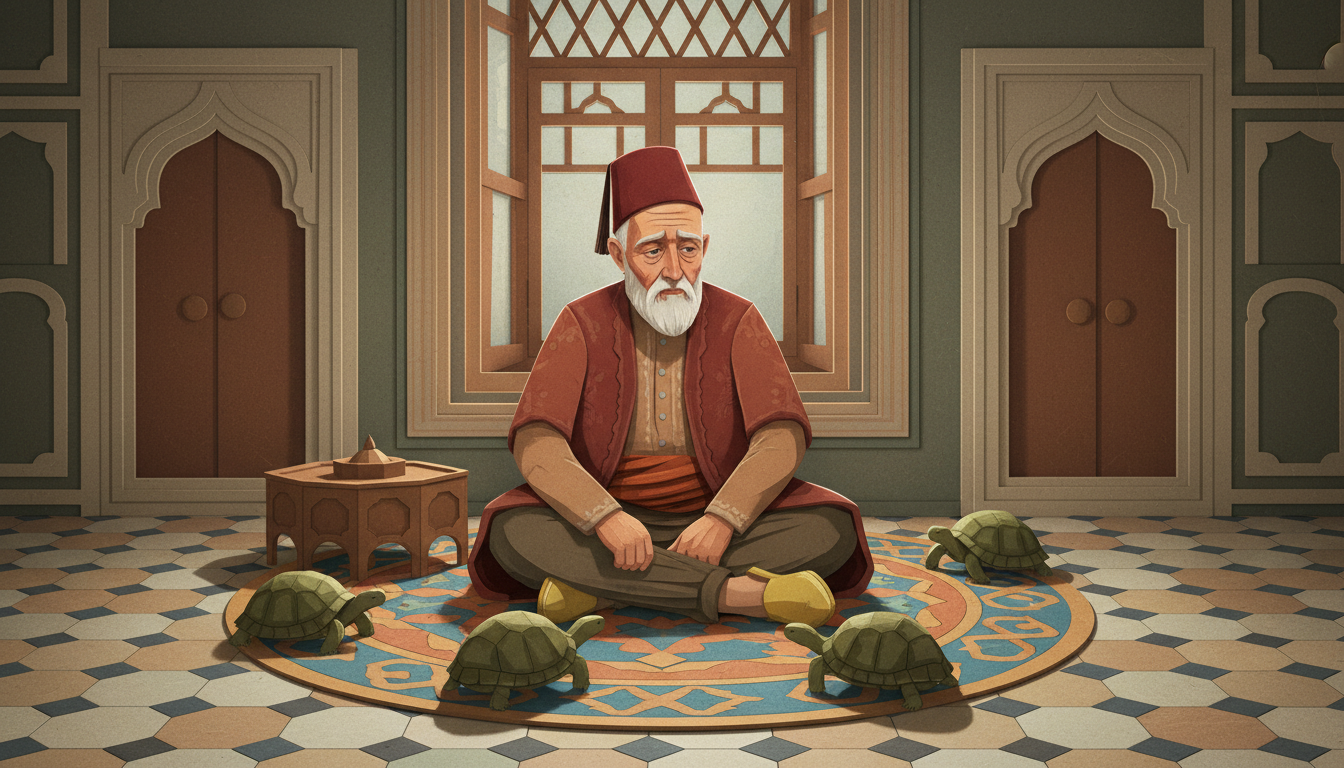
Painted in 1906 by Osman Hamdi Bey (1842–1910), The Tortoise Trainer (Turkish: Kaplumbağa Terbiyecisi) is one of the most arresting images to emerge from the late Ottoman world. At once whimsical and pointed, the painting shows a robed man in a fez attempting the absurd task of training a group of tortoises. The work is celebrated not only for its technical finesse—Osman Hamdi’s command of color, texture, and composition—but also for the layered meanings critics and viewers have read into the scene: satire, melancholy, and a meditation on the pace of social change.
Osman Hamdi Bey: Artist, Scholar, Reformer
Osman Hamdi Bey was more than a painter: he was a polymath who moved comfortably between the worlds of art, archaeology, and state service. Born in 1842, he trained in Europe and returned to the Ottoman capital as a culturally cosmopolitan figure whose work helped shape modern Turkish visual identity. As director of the Imperial Museum and an educator, Osman Hamdi played a formative role in conserving antiquities and promoting arts education in Istanbul—an experience that would inform his paintings’ frequent interplay between historical objects, costume, and cultural signifiers.
What You See: Description and Composition
The image centers on a solitary, dignified man—often identified simply as a trainer—dressed in a long dark robe and a fez. He stands before a low platform or drum, holding a stick and a small hand drum or tambourine, an apparatus meant to command attention. Around his feet and scattered across the floor move several tortoises, slow and indifferent. Behind him, shelves and walls crowded with tomes, boxes, and objects suggest a study or museum-like interior. Light pierces the space with soft, natural clarity, picking out the sheen of the shell, the folds of fabric, and the textured surfaces of books and rugs.
Symbolism and Interpretations
Scholars and viewers have proposed several readings of The Tortoise Trainer. The most persistent sees the painting as an allegory of reform in the late Ottoman Empire. In that frame, the trainer stands for reformers—bureaucrats, intellectuals, or the state itself—attempting to hurry a society perceived as slow to change. The tortoises, by temperament and nature, resist speed: they are literal embodiments of slowness, conservatism, and the difficulty of reorienting long-standing traditions.
But Osman Hamdi’s image resists reductive political caricature. The trainer’s posture is almost reverent rather than triumphant; there is no comic cruelty in the scene. Instead of mocking the tortoises, the painting invites sympathy for both figures: the patient persistence of the trainer and the stoic, implacable steadiness of the animals. In this way the work can read as a meditation on cultural endurance and the limits of persuasion—how reformers must reckon with time, habit, and the rootedness of custom.
Style and Technique
Executed in oil on canvas, Osman Hamdi blends a detailed, realist eye with a taste for theatrical staging. His brushwork renders fabrics, shell textures, and architectural surfaces with meticulous care. The palette is restrained and atmospheric: deep browns, soft ochres, and cool highlights that organize the composition and focus the viewer’s gaze on the interaction between man and animal. Osman Hamdi often set his figures in interiors filled with antiquities and books—visual cues to his identity as a scholar-collector—and The Tortoise Trainer continues this habit, turning the interior into a stage for an idea.
Historical Context: Late Ottoman Culture
Painted during a period of intense debate about modernization, identity, and the future of the Ottoman state, the work should be read against the social and intellectual currents of the early 20th century. Reformist movements, educational reforms, and the slow penetration of European legal and administrative models into Ottoman institutions created a charged atmosphere. Osman Hamdi, who worked inside those institutions, was well-placed to observe both their ambitions and their frustrations. The tortoise metaphor—slow but persistent—captures a nuanced sense of how societies actually transform: incrementally and imperfectly.
Reception and Legacy
From its first exhibitions the painting drew attention for its unusual subject and layered sensibility. Over the following decades it became one of the most recognized images in Turkish cultural memory, reproduced, discussed, and frequently invoked in debates about tradition and modernity. For many contemporary viewers, the painting’s charm lies in its ambiguity: it is both humorous and elegiac, critical and compassionate.
Why the Painting Still Matters
- Political and cultural allegory: It provides a compact, eloquent metaphor for the complexities of social change.
- Cross-disciplinary identity: Osman Hamdi’s roles as curator, archaeologist, and painter give the work intellectual depth unusual for salon pictures.
- Visual originality: The image disrupts stereotypical Orientalist tropes—rather than exoticizing, it problematizes and humanizes.
- Enduring resonance: The painting’s themes—patience, persistence, the friction of reform—remain relevant in any era of rapid change.
Closing Thoughts
The Tortoise Trainer is more than a clever conceit: it is a finely crafted meditation on time, power, and cultural transformation. Osman Hamdi Bey’s training of animals that cannot be hurried becomes, paradoxically, a way of teaching viewers how to see history itself—as gradual, stubborn, and often resistant to spectacle. It is this moral subtlety—expressed with painterly elegance—that secures the painting’s place among the great images of late Ottoman art and ensures its continuing fascination for audiences today.
Further reading: for those interested in exploring the painting more deeply, seek museum catalogues and monographs on Osman Hamdi Bey and late Ottoman visual culture. Close visual study, paired with historical research into the social reforms of the era, rewards the viewer with rich layers of meaning.