Vincent van Gogh: Life, Paintings, and the Birth of Modern Art
Vincent van Gogh (1853–1890) was a Dutch Post-Impressionist painter whose vivid color and expressive brushwork shaped 20th-century art.
Who Was Vincent van Gogh?
Vincent Willem van Gogh was a Dutch Post-Impressionist painter who, in slightly less than a decade of work, produced about 2,100 paintings and drawings that rank among the most recognizable images in Western art. Born in 1853 to a village pastor in the southern Netherlands, he came to painting late and worked at it without commercial success until his death at thirty-seven. He is now generally regarded as one of the most influential figures in the history of modern art.
Van Gogh's significance does not lie in the size of his lifetime audience, which was minute, but in what he did with color, line, and emotional honesty in the last few years of his life. Working through periods of severe mental illness, he developed a thick, expressive brushwork and a saturated palette that pulled European painting decisively past Impressionism toward the expressive modernism of the 20th century.
Early Life in the Netherlands (1853–1880)
Vincent was the eldest surviving child of Theodorus van Gogh, a Dutch Reformed minister, and Anna Cornelia Carbentus, the daughter of a bookbinder to the royal court at The Hague. He was born exactly one year, to the day, after a stillborn brother who shared his name — a coincidence that scholars have long noted shaped his sense of having been born under the sign of loss.
At sixteen he was placed in the firm of Goupil & Cie, his uncle's international art-dealing house. He worked at branches in The Hague, London, and Paris between 1869 and 1876. The role gave him a sustained, intimate education in 17th-century Dutch painting, Barbizon landscape, and the French Realism of Millet — work that would echo in his canvases a decade later — but he proved an indifferent salesman and was eventually dismissed.
What followed was four years of restless searching. He taught briefly in England, considered the ministry, failed a theology examination at Amsterdam, and spent 1879 as a lay missionary among coal miners in the Borinage region of Belgium. The work brought him into contact with hardship that affected him deeply, and it was in the Borinage, drawing the miners and their families, that he resolved — at twenty-seven — to become an artist.
The Dutch Period (1881–1885)
Van Gogh spent his first five years as an artist in the Netherlands, mostly working without formal training. He produced hundreds of drawings of peasants, weavers, and rural laborers — figures drawn from the world Jean-François Millet had taught him to see. The palette of these years is dark: earth browns, slate grays, bituminous blacks. His subject was the dignity of work and the harshness of rural poverty.
The culmination of the Dutch period was The Potato Eaters, completed in April 1885. Van Gogh wrote to his brother Theo that he wanted to show that 'these people, eating their potatoes in the lamplight, have dug the earth with the same hands they are putting in the dish.' The painting was rejected by the small audience he had hoped to reach, but he considered it the first work he had made that was entirely his own.
In November 1885 he enrolled briefly at the Royal Academy of Fine Arts in Antwerp, where he discovered Japanese woodblock prints and the bright color of Rubens. Within months he had resolved to join his brother Theo in Paris.
Paris and the Impressionists (1886–1887)
Van Gogh arrived in Paris on 28 February 1886 and moved into Theo's apartment in Montmartre. Theo, now a successful dealer at Goupil's branch on the boulevard Montmartre, introduced him to the artists buying and selling through the firm — among them Pissarro, Degas, and the younger Émile Bernard, Paul Signac, and Henri de Toulouse-Lautrec. Vincent began to attend the studio of Fernand Cormon, where he met Bernard.
The two years in Paris transformed his work. The dark Dutch palette dropped away. Under the impact of Impressionist optical color and the Pointillism of Seurat and Signac, his brushwork loosened and his canvases brightened. He spent long hours in the Tambourine café and the print shop of the art dealer Père Tanguy, both of which carried Japanese ukiyo-e — work that would mark every canvas he painted from 1887 on. He produced more than two hundred works in these two years, including a remarkable run of self-portraits in which he could be seen testing one stylistic possibility after another.
By early 1888 he was exhausted by Paris — the noise, the social demands, the bohemian drinking — and dreamed of a place where the sun was strong and the colors stronger. On 20 February 1888 he boarded a train south.
Arles and the Yellow House (1888)
Van Gogh's fifteen months in Arles produced the canvases that most people now think of when they think of Van Gogh. The Provençal light — flat, gold, hard-edged — gave him the conditions he had been chasing. In May he rented four rooms at 2 Place Lamartine, the Yellow House, where he intended to establish a community of like-minded painters: 'the Studio of the South.' He had wallpapered, furnished, and equipped the house in time for autumn.
He worked at a tremendous pace, sometimes finishing a finished canvas in a single sitting. The summer brought the Harvest landscapes, the Sower, and the night canvases — Café Terrace at Night, painted in September on the Place du Forum, was the first major work in which he composed an entire scene from observation of starlight rather than from imagination. In August he painted the first version of the Sunflowers — a series of large canvases of cut sunflowers in earthenware vases intended to decorate the guest bedroom for the arrival of his friend Paul Gauguin.
Gauguin and the Breakdown (October–December 1888)
Gauguin arrived in Arles on 23 October 1888, having been bankrolled by Theo to make the trip. The two painted together for nine weeks. They worked the same motifs side by side — Les Alyscamps, Madame Roulin, a vineyard above the town — and pushed each other's practice. Gauguin pressed Van Gogh to invent more, to paint from memory rather than the motif; Van Gogh pressed Gauguin to look harder at what was in front of him. They argued constantly.
On the evening of 23 December 1888 the relationship collapsed. Gauguin, who had said earlier that day that he was leaving for Paris, left the Yellow House and took a hotel room. That night Vincent severed the lower part of his own left ear with a razor. He wrapped the piece in newspaper and delivered it to a woman at a brothel he frequented. He was discovered the next morning in the Yellow House by the police and admitted to the hospital at Arles. He was thirty-five.
Gauguin returned to Paris immediately. The two never met again, though they corresponded with cautious affection for the rest of Vincent's life. Vincent spent most of January in the hospital, then went home, then back to the hospital — alternating between productive lucidity and short, severe episodes of disorientation. By April he had decided that the only way to keep working was to enter a hospital voluntarily. On 8 May 1889 he committed himself to the asylum of Saint-Paul-de-Mausole at Saint-Rémy-de-Provence.
The Asylum at Saint-Rémy (May 1889 – May 1890)
Saint-Rémy was the most artistically concentrated year of Van Gogh's life. The asylum allowed him a second room as a studio and, when he was well enough, the use of the surrounding olive groves and wheat fields. He produced roughly 150 paintings in twelve months, including most of the works for which he is now most famous.
The Starry Night, painted in mid-June 1889, was the view from the east-facing window of his upstairs cell — although the village in the foreground was added from imagination, since the actual view did not include it. The painting is the rare canvas in which Van Gogh worked partly from memory and dream rather than from direct observation, which is one reason it stands out so sharply within his late work.
The Irises were painted in his first week at the asylum, in May 1889. The Olive Trees and Cypresses series occupied much of that summer and autumn. He repainted Millet, Delacroix, and Rembrandt from black-and-white reproductions, translating them into his own color. He suffered severe episodes — one in February 1890 that lasted two months and silenced him entirely — but worked between them with an intensity that he himself found difficult to explain.
Auvers-sur-Oise and Death (May–July 1890)
On 16 May 1890 Van Gogh left Saint-Rémy and travelled to Paris to see Theo, Theo's wife Johanna, and their newborn son Vincent Willem (Theo had named the child after his brother). After three days in Paris he moved north to Auvers-sur-Oise, an artists' village on the Oise river, to be near Dr. Paul Gachet — a homeopathic physician and amateur painter who had agreed to oversee his care.
Auvers was the most productive period of Van Gogh's life by any measure. In roughly seventy days he produced approximately seventy-five paintings, including the Portrait of Dr Gachet, the late Wheatfields, the Church at Auvers, Daubigny's Garden, and the wide horizontal Wheatfield with Crows. The pace and intensity were unsustainable.
On the afternoon of 27 July 1890, in a wheat field north of the village, Van Gogh shot himself in the chest with a revolver. He walked back to his attic room at the Auberge Ravoux and lived for thirty hours, talking quietly with Theo and smoking his pipe. He died in the early morning of 29 July, aged thirty-seven. Theo, devastated, fell ill almost immediately; he died six months later, in January 1891, and was eventually reburied beside his brother in the cemetery at Auvers.
Style and Technique
Van Gogh's mature style — roughly the work from late 1887 onward — is defined by three things. The first is impasto: paint applied thickly and visibly with the brush or the palette knife, leaving the canvas surface dimensional. The second is saturated, frequently complementary color, used not to describe local hue but to express emotion: a yellow café against a midnight-blue street, an orange sun against violet clouds. The third is the swirl — a kind of rhythmic, organized brushstroke that travels across the surface and binds disparate elements together into a single felt gesture.
These three traits separate him from Impressionism. The Impressionists had been concerned with the optical record of light on a particular afternoon. Van Gogh used Impressionist color and brushwork as raw material for something different: a record of how he felt in the presence of a scene, conveyed through the same surface. This shift — from optics to expression — is what most art historians mean when they call him a Post-Impressionist and the most direct precursor of the German Expressionists and the Fauves of the next generation.
He worked from observation almost always, and almost always quickly. He completed a major canvas in a single day with reasonable frequency. He returned to favorite motifs — sunflowers, cypresses, his bedroom, his own face — with the systematic energy of someone testing variations on a theme. He used reed pens for drawing as well as the more conventional graphite and ink, producing a series of dense, vibrating ink drawings of the Provençal landscape that rank with the great drawings of the 19th century.
Legacy and Posthumous Fame
Van Gogh sold one painting during his lifetime that we can confidently document — The Red Vineyard (November 1888), bought by the Belgian painter Anna Boch in early 1890 for 400 francs. His posthumous reputation is largely the work of three people. The first was Émile Bernard, who organized a small memorial exhibition in Paris in April 1892. The second was his sister-in-law Johanna van Gogh-Bonger — after Theo's death in 1891 she inherited the entire body of work and the brothers' correspondence, and she spent the next thirty-five years cataloging, lending, and finally publishing the letters.
The third was the German collector Helene Kröller-Müller, who between 1907 and 1922 acquired roughly 90 paintings and 175 drawings — the foundation of what is now the Kröller-Müller Museum in Otterlo. By the 1910s Van Gogh's influence was visible in the work of the Fauves (Matisse, Derain), the German Expressionists (Kirchner, Nolde), and eventually in Abstract Expressionism. By the 1990s his canvases were among the most expensive ever sold at auction. He has become, in the late 20th and early 21st centuries, the popular symbol of artistic genius unrecognized in its own time — though the historical record is more complicated than the cliché allows.
Notable Works
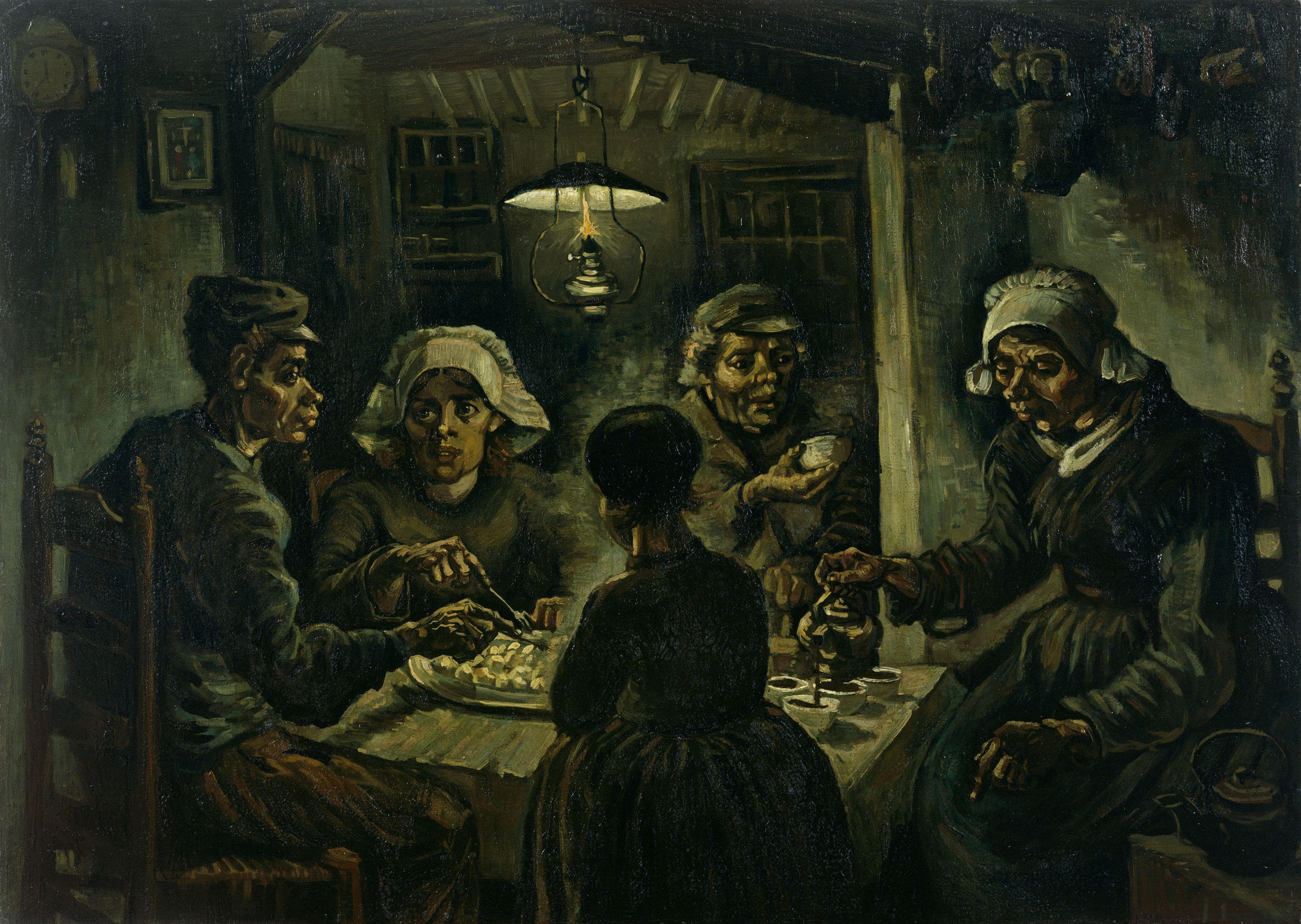
The Potato Eaters
1885
Van Gogh Museum, Amsterdam
Van Gogh's first ambitious figure composition and the culminating work of his Dutch period; deliberately dark and rough as a statement of solidarity with the peasants depicted.
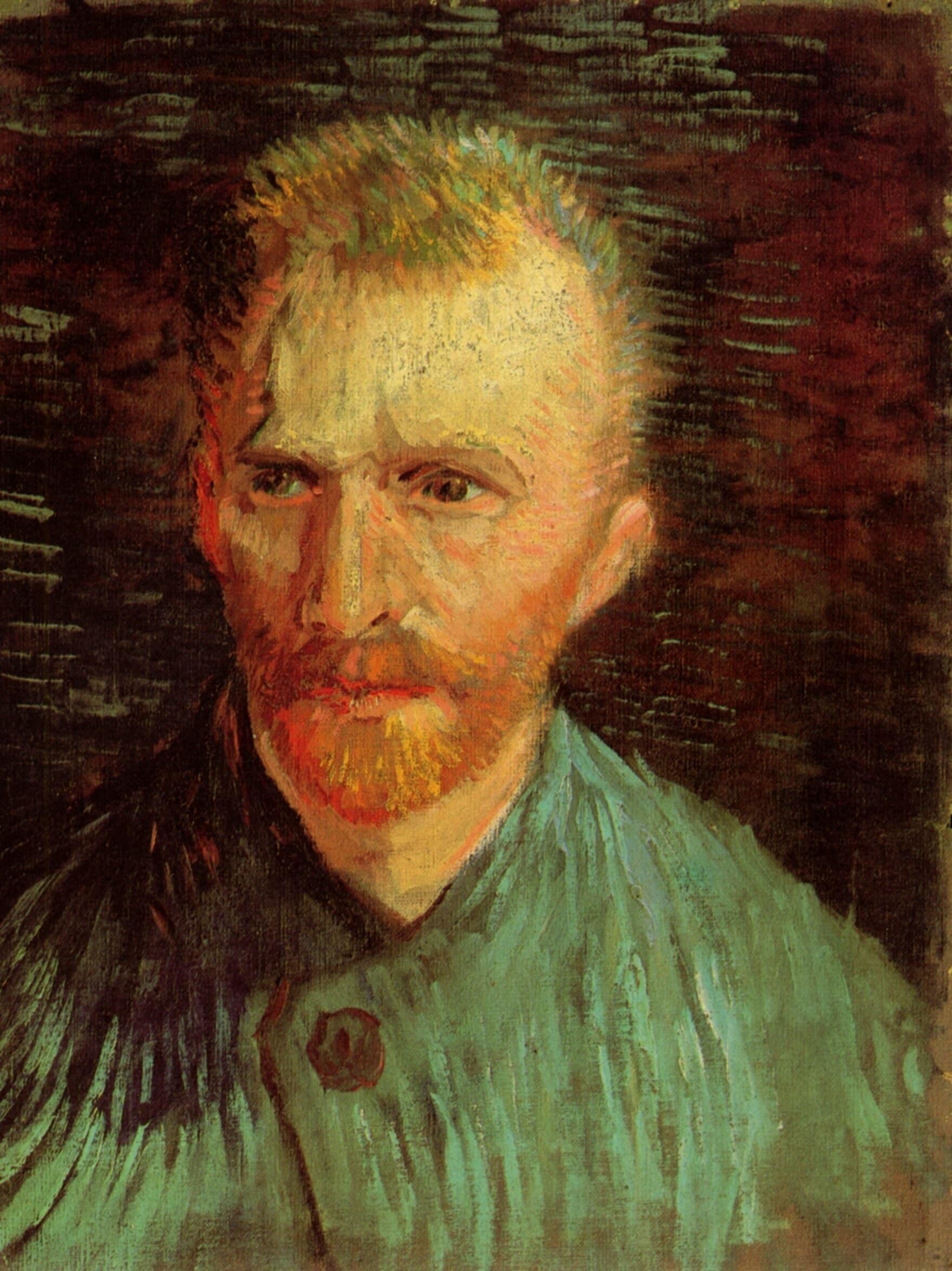
Self-Portrait with Grey Felt Hat
1887
Van Gogh Museum, Amsterdam
One of more than 35 self-portraits Van Gogh painted in Paris between 1886 and 1888 while testing the Impressionist and Pointillist techniques he had just encountered.
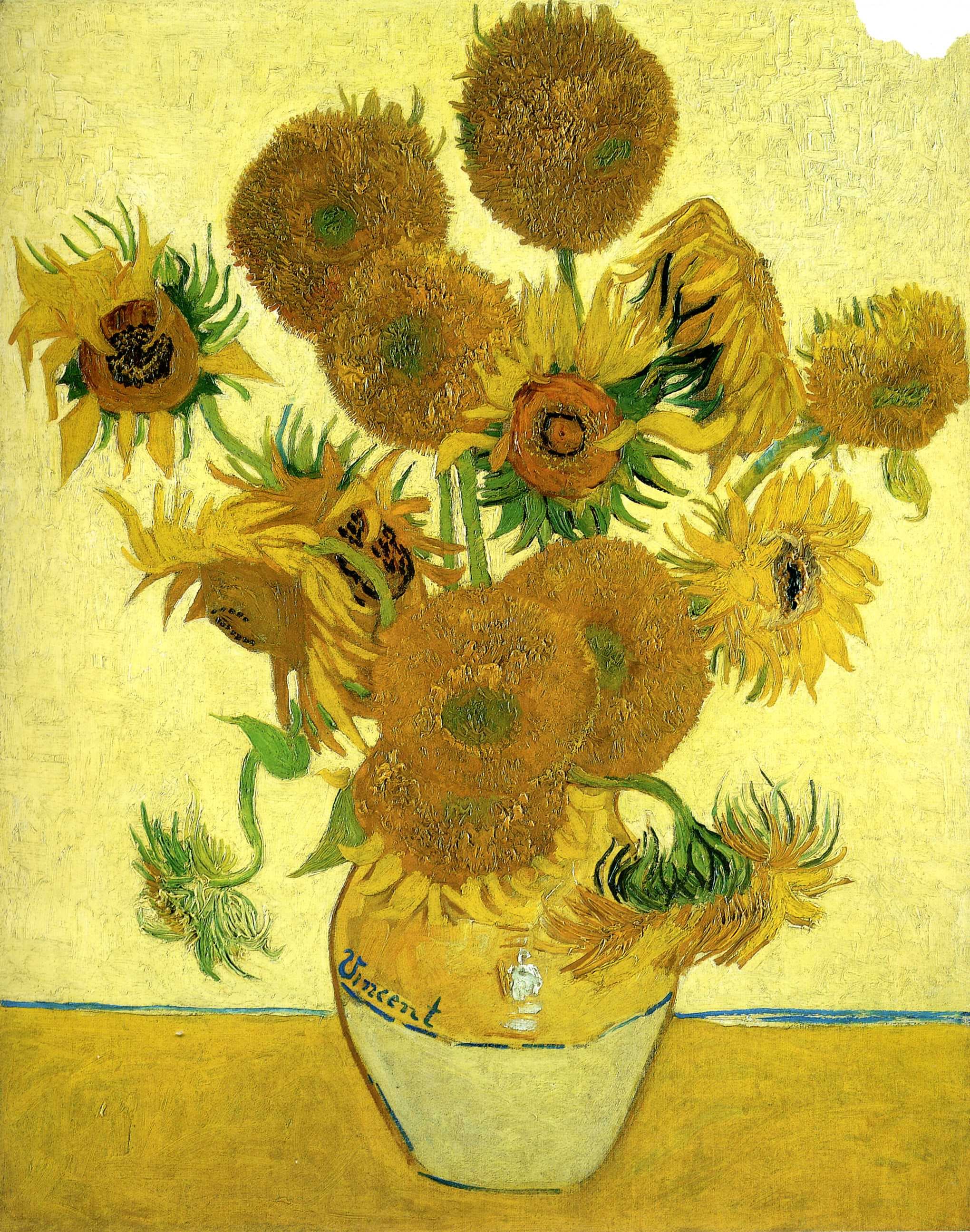
Sunflowers (Arles series)
1888
Multiple — National Gallery (London), Van Gogh Museum (Amsterdam), Neue Pinakothek (Munich), Sompo Museum (Tokyo), Philadelphia Museum of Art
The five surviving large still-life paintings of cut sunflowers in earthenware vases, intended to decorate the Yellow House for Gauguin's arrival; Van Gogh considered them his signature work.
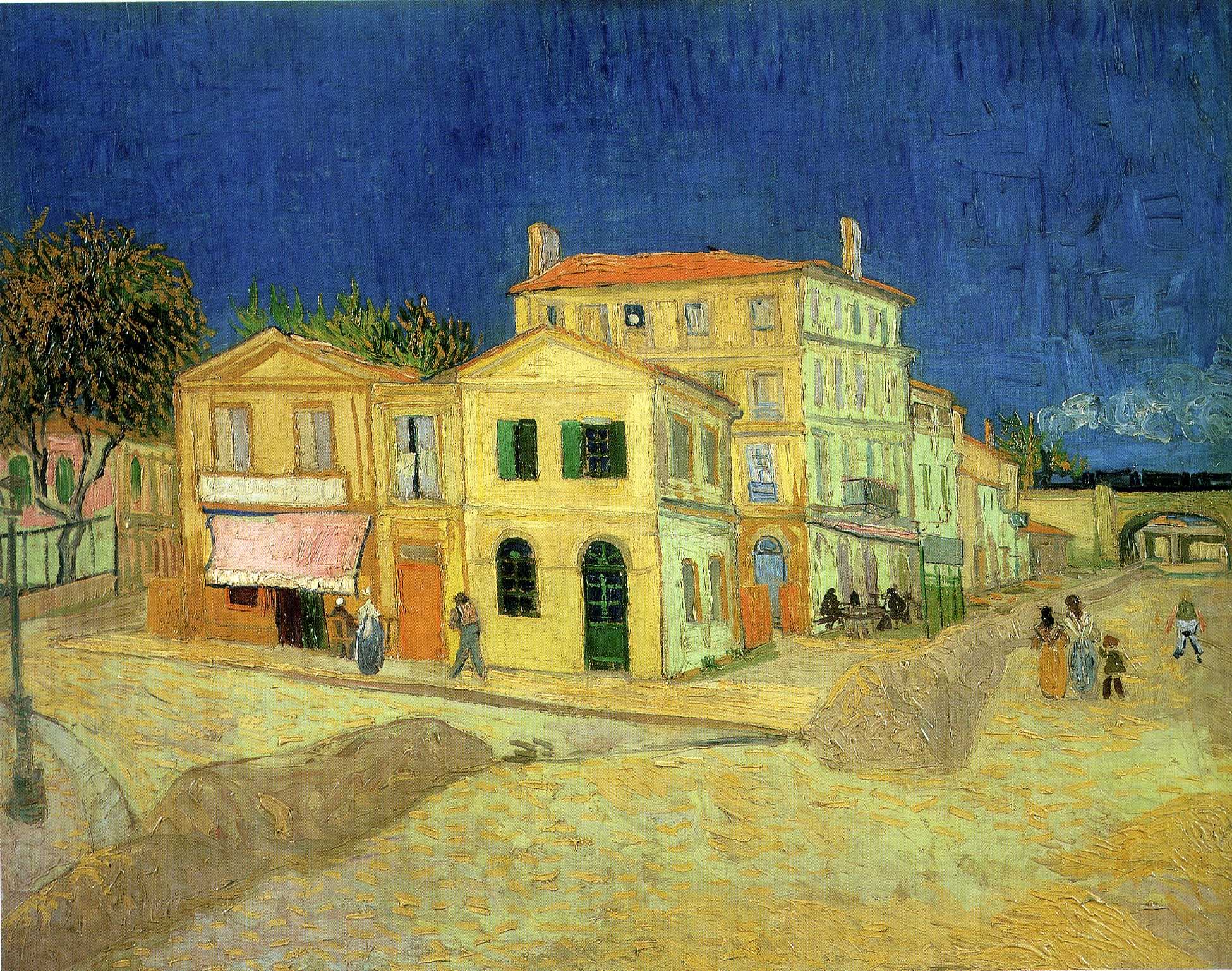
The Yellow House (The Street)
1888
Van Gogh Museum, Amsterdam
Van Gogh's portrait of 2 Place Lamartine in Arles — the studio he hoped would become a community of southern painters. Painted in late September 1888, weeks before Gauguin's arrival.
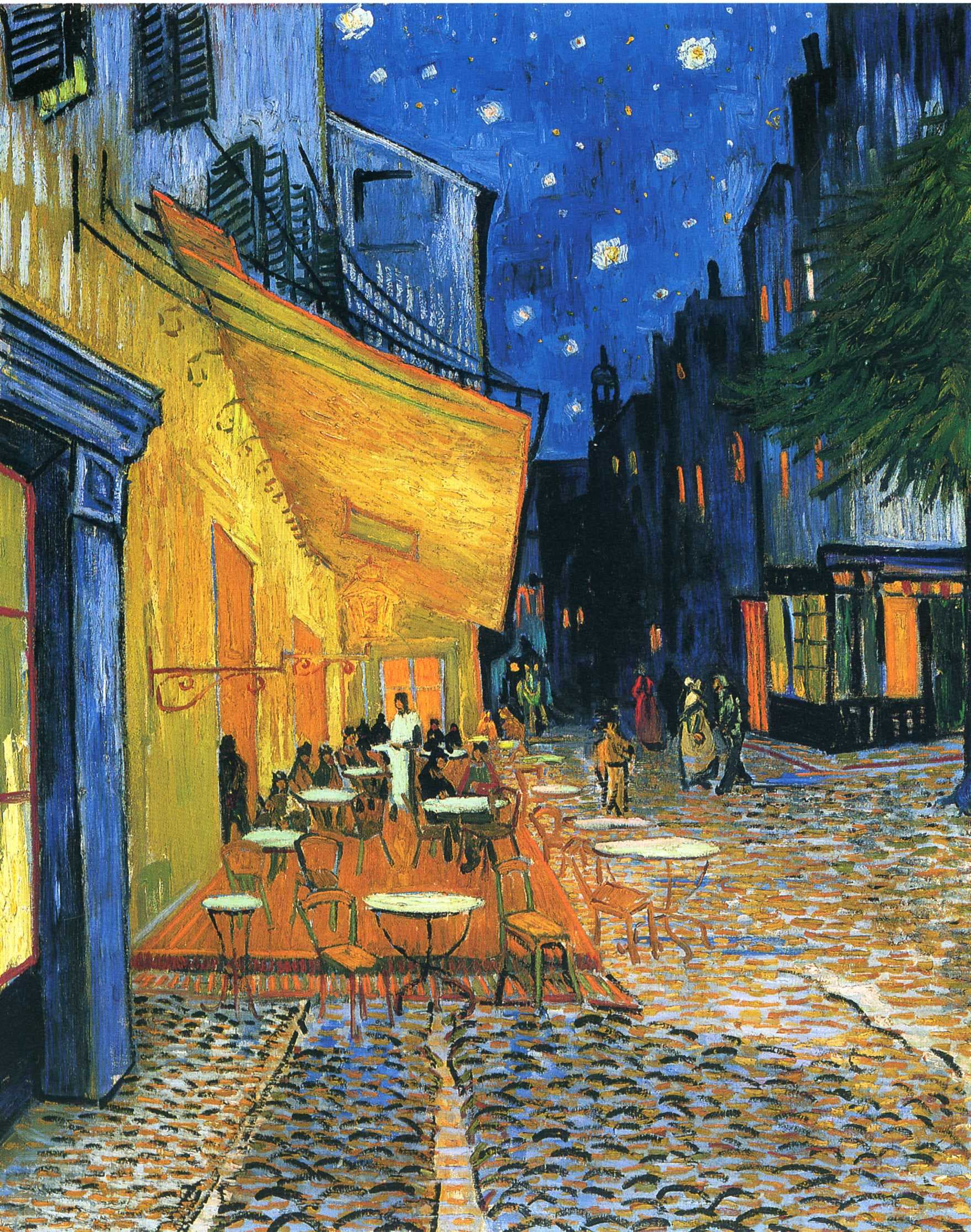
Café Terrace at Night
1888
Kröller-Müller Museum, Otterlo, Netherlands
The first of Van Gogh's major night canvases, painted on the Place du Forum in Arles in September 1888 directly from observation by gaslight and starlight.
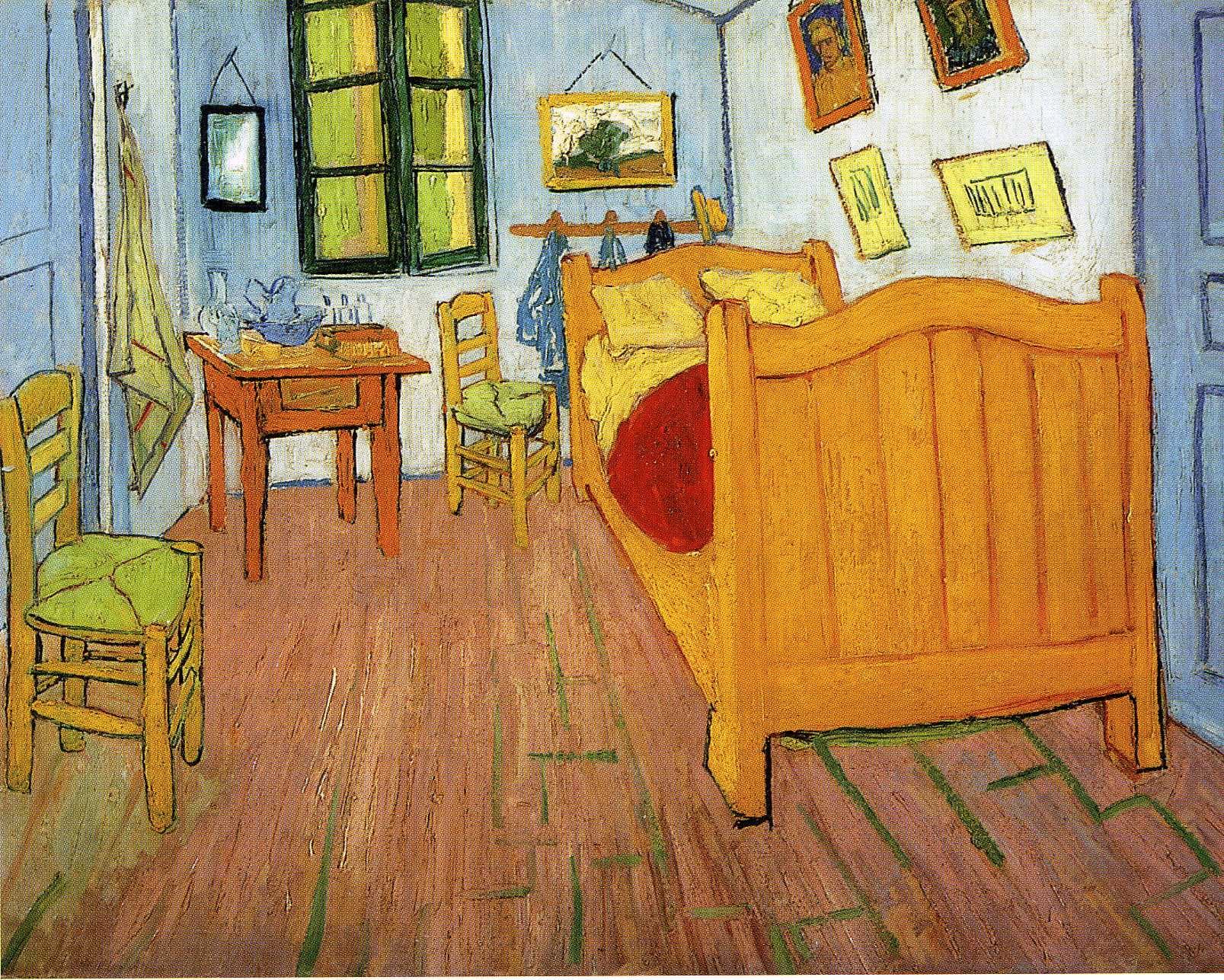
Bedroom in Arles
1888
Van Gogh Museum (Amsterdam), Art Institute of Chicago, Musée d'Orsay (Paris)
Three painted versions of Van Gogh's small bedroom at the Yellow House, conceived as an image of rest and stability and titled by him simply 'The Bedroom.'
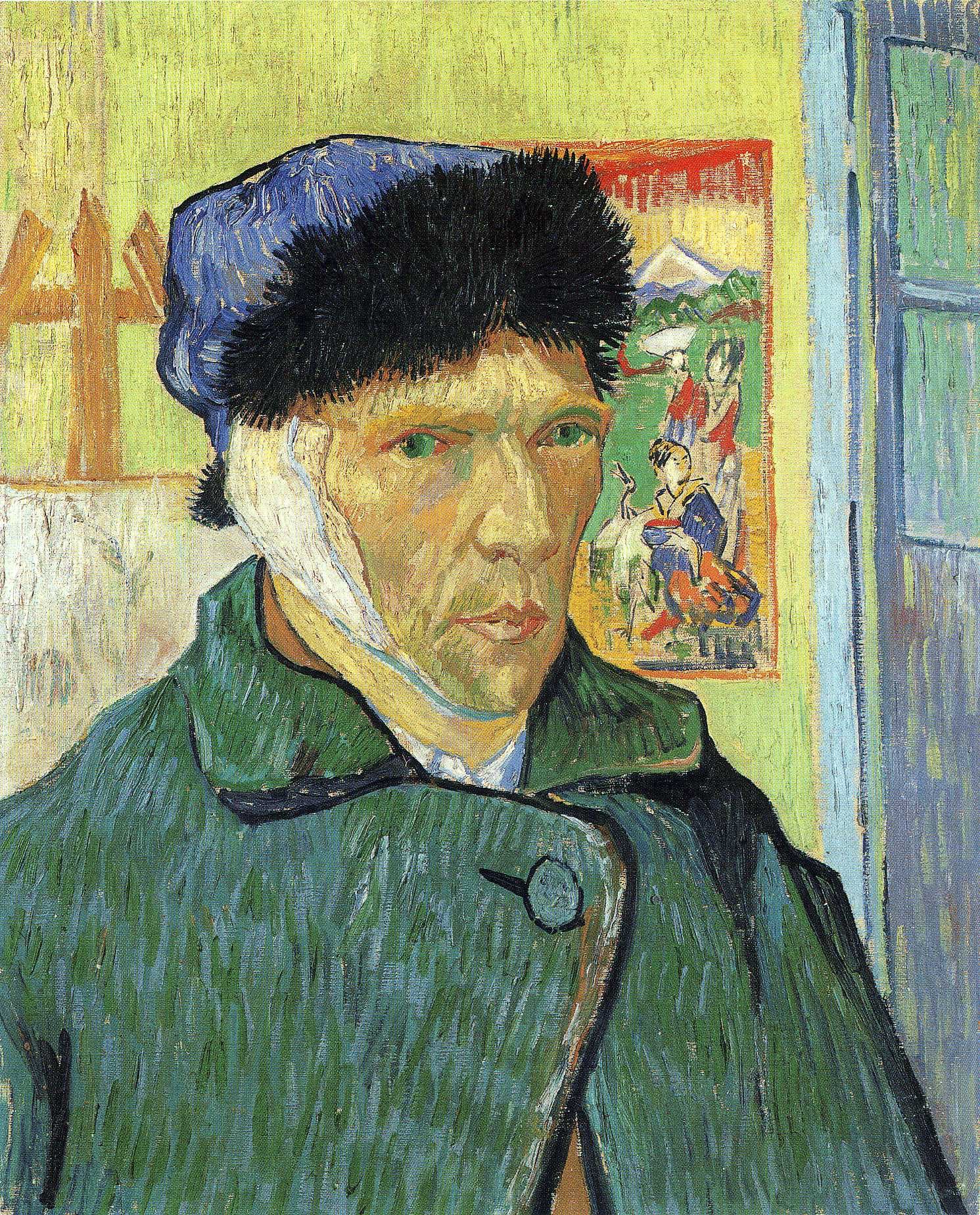
Self-Portrait with Bandaged Ear
1889
Courtauld Gallery, London
Painted in January 1889 in the weeks after the breakdown that ended his collaboration with Gauguin; the bandaged ear is visible in the mirror, and a Japanese print hangs on the wall behind him.
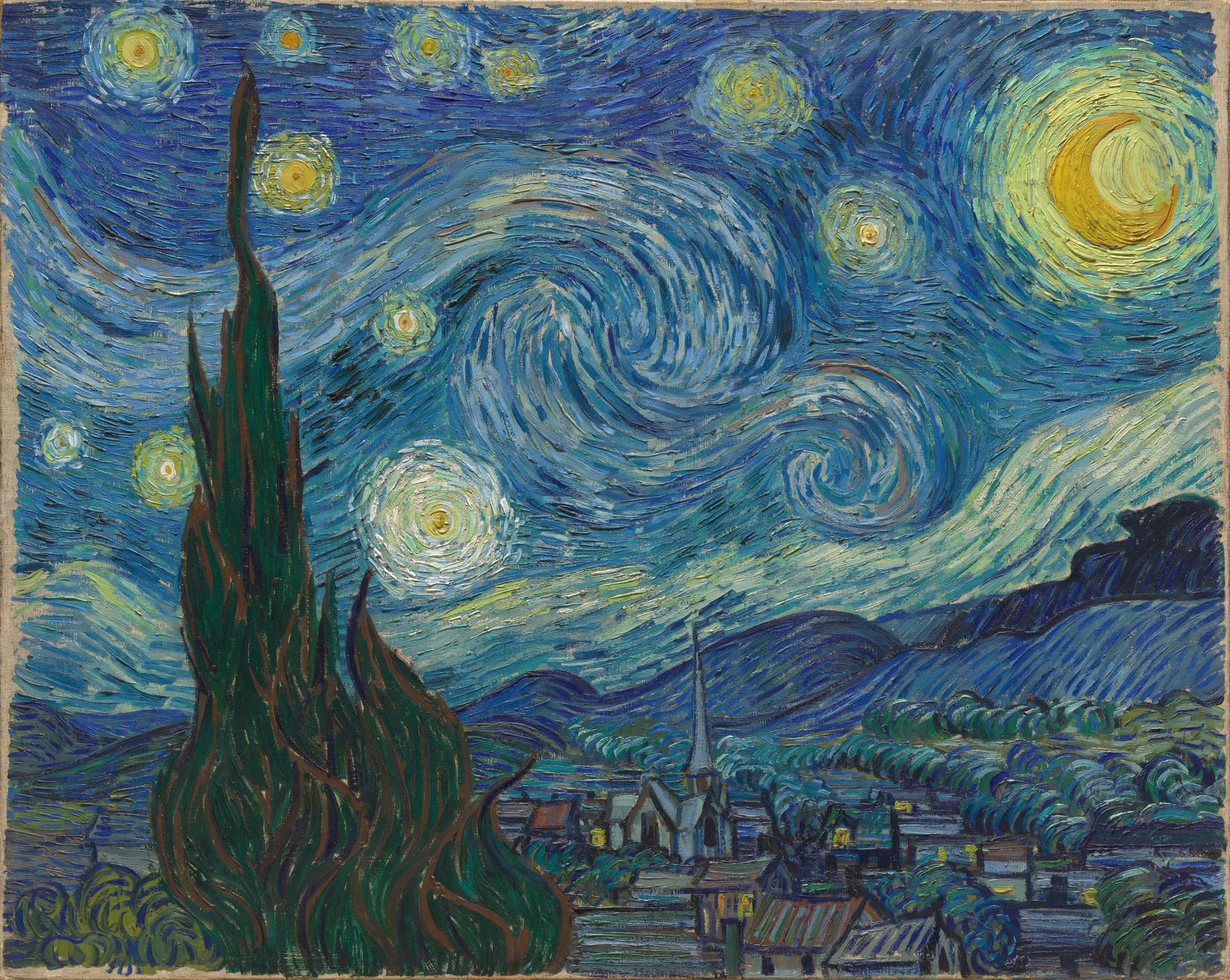
The Starry Night
1889
Museum of Modern Art, New York
Painted in June 1889 from the east-facing window of his cell at the Saint-Rémy asylum — the village beneath is invented. One of the most reproduced paintings in Western art.
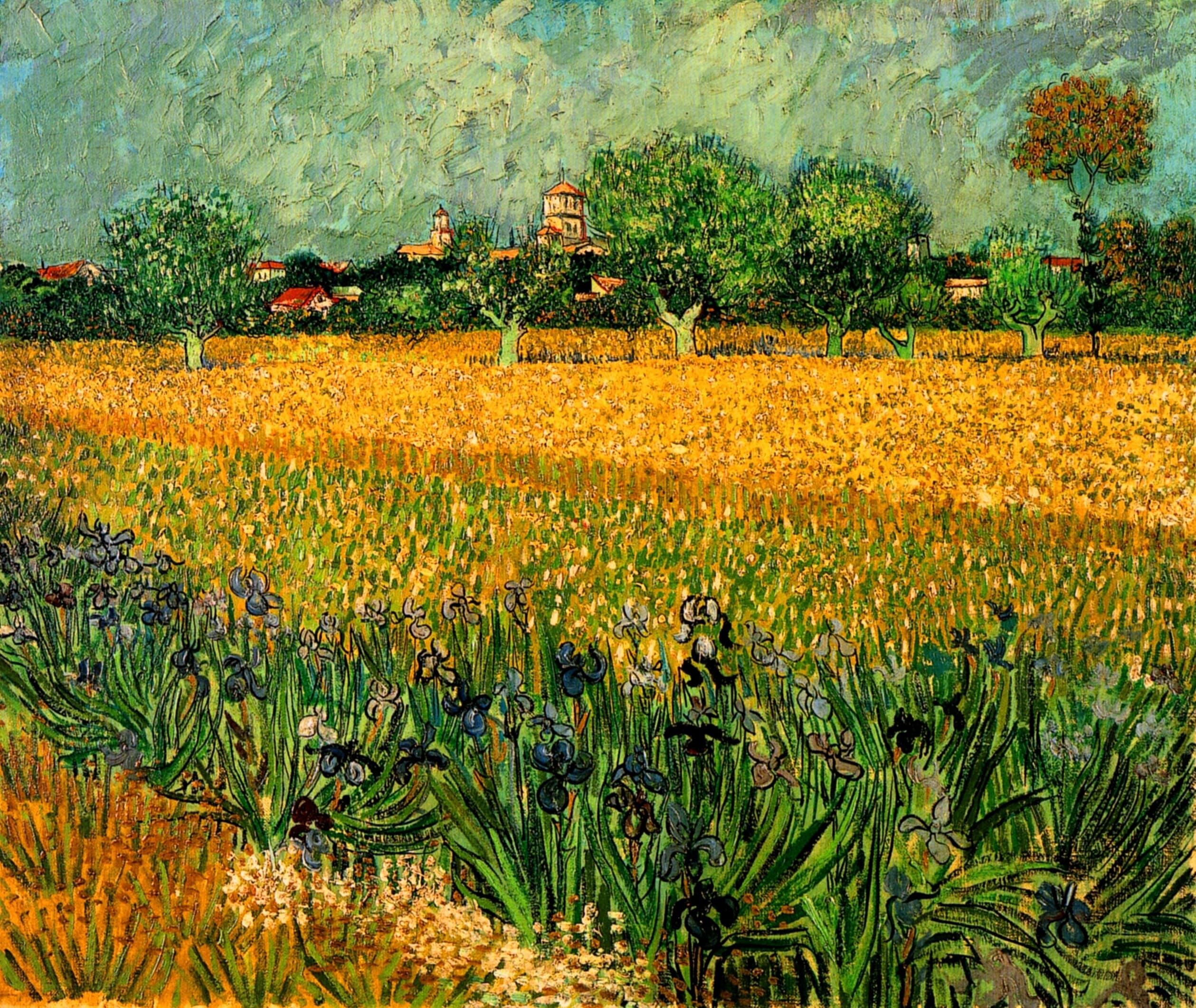
Irises
1889
J. Paul Getty Museum, Los Angeles
Painted in the first week of Van Gogh's stay at Saint-Rémy as a study for what he hoped would calm him; sold in 1987 for $53.9 million, then the highest price ever paid for a painting.
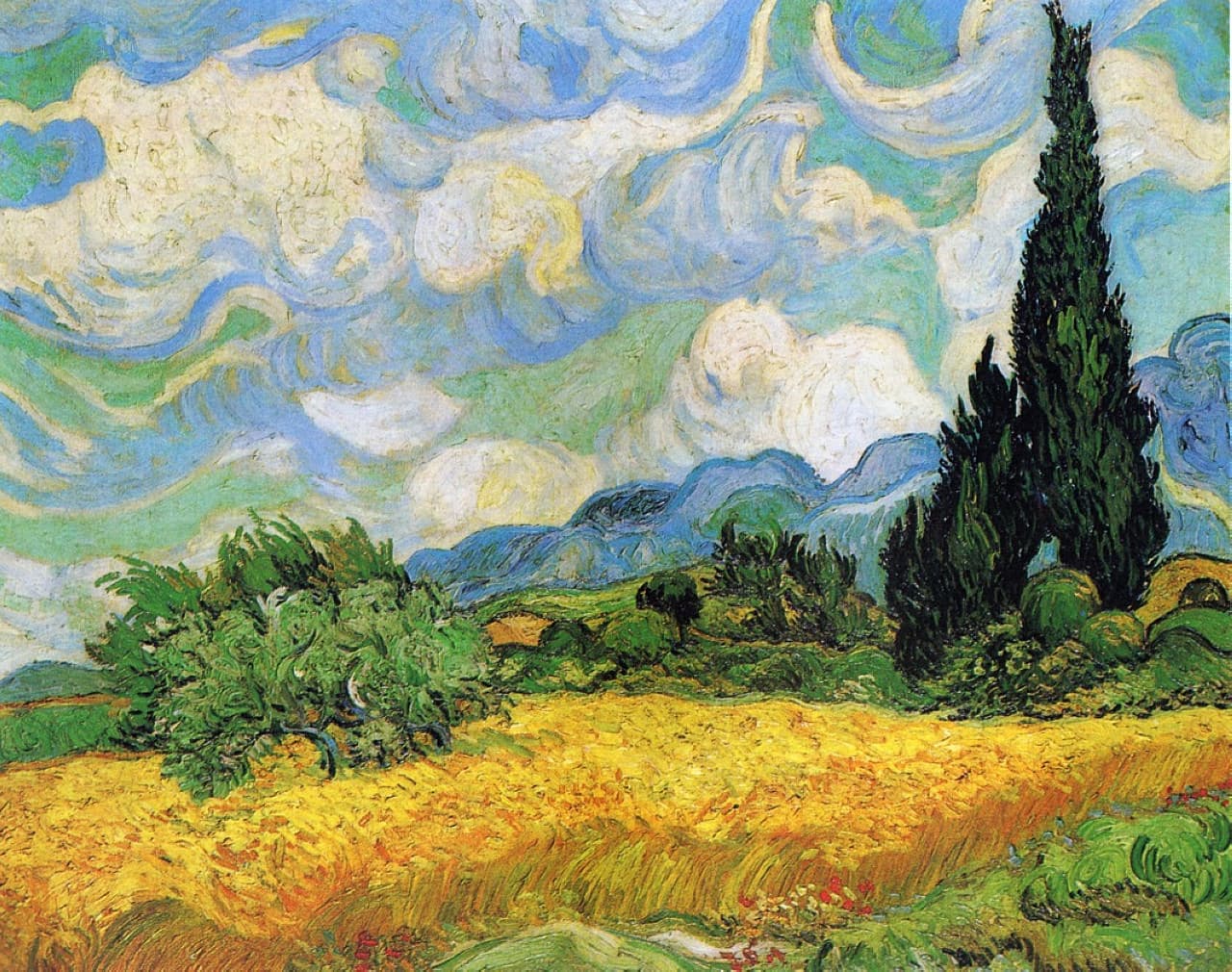
Wheatfield with Cypresses
1889
Three versions — Metropolitan Museum of Art (New York), National Gallery (London), private collection
One of Van Gogh's late landscapes around the Saint-Rémy asylum, with the dark vertical cypress that he described in a letter as 'beautiful as an Egyptian obelisk.'
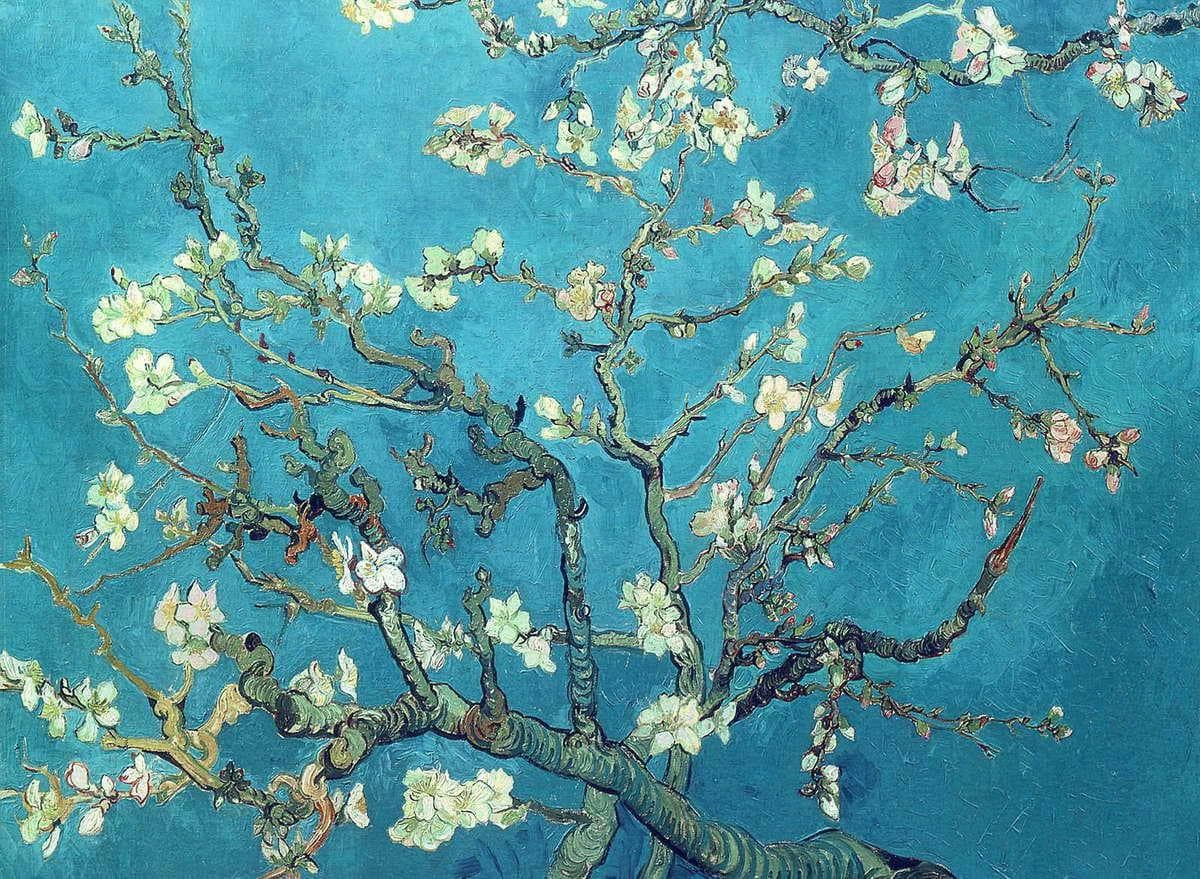
Almond Blossoms
1890
Van Gogh Museum, Amsterdam
Painted at Saint-Rémy in February 1890 to celebrate the birth of his nephew, Vincent Willem van Gogh; an almost direct homage to Japanese ukiyo-e composition.
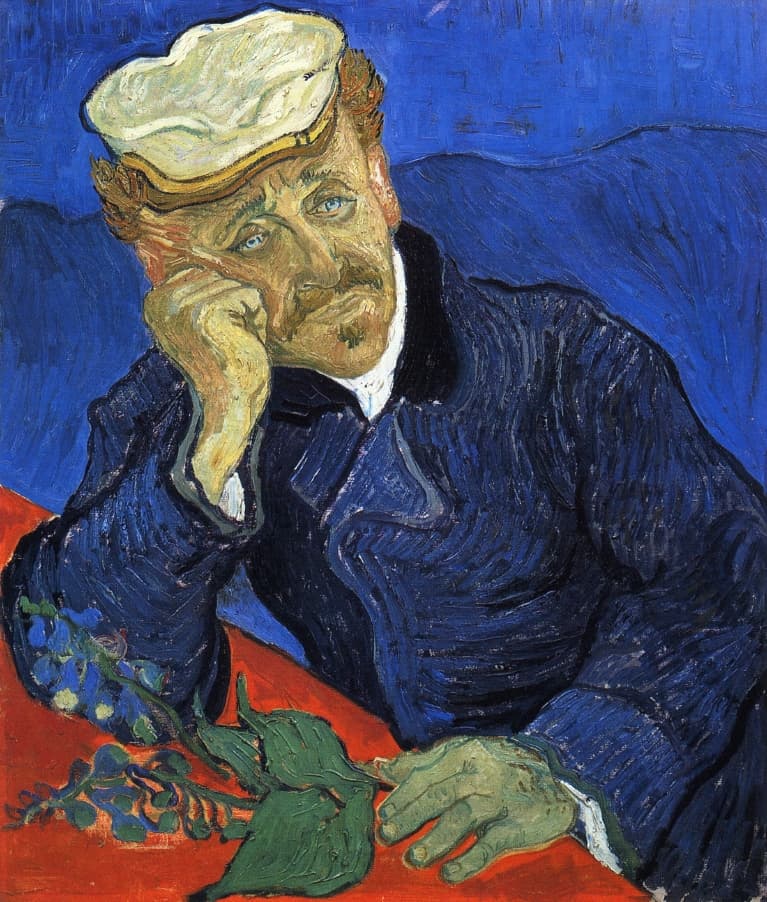
Portrait of Dr Gachet
1890
Musée d'Orsay (Paris); a second version, private collection (formerly Saito)
Painted in Auvers in June 1890, six weeks before Van Gogh's death. The second version sold in 1990 for $82.5 million, then a record.
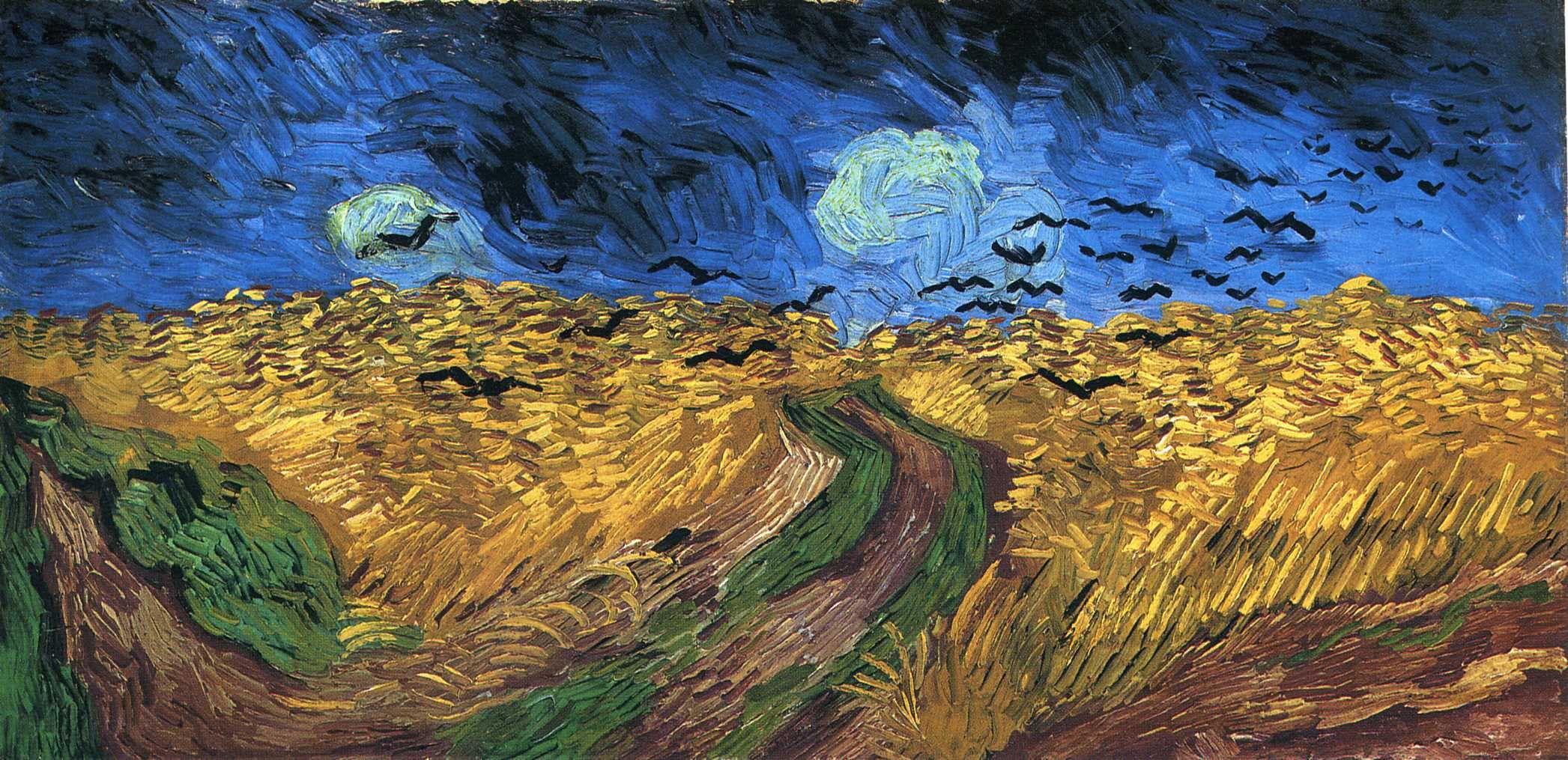
Wheatfield with Crows
1890
Van Gogh Museum, Amsterdam
Painted in Auvers in early July 1890, weeks before his death; the doubled-square horizontal format is unusual in his work and the composition has long been read — perhaps over-read — as a premonition.
In Their Own Words
“I dream my painting, and then I paint my dream.”
“What would life be if we had no courage to attempt anything?”
“Great things are not done by impulse, but by a series of small things brought together.”
“I want to touch people with my art. I want them to say 'he feels deeply, he feels tenderly.'”
Influences
- Jean-François Millet and the Barbizon School
- Anton Mauve (his cousin and only painting teacher)
- Rembrandt and 17th-century Dutch painting
- Japanese ukiyo-e woodblock prints (Hokusai, Hiroshige, Utamaro)
- Impressionism and Pointillism (encountered in Paris 1886–1888)
- Adolphe Monticelli's thick impasto
Influence on Later Art
- Fauvism (Matisse, Derain, Vlaminck)
- German Expressionism (Die Brücke, Der Blaue Reiter)
- Egon Schiele and Austrian Expressionism
- Chaim Soutine
- Abstract Expressionism (especially Willem de Kooning)
- Modern figurative painting broadly
Where to See These Works
Van Gogh Museum
The largest collection in the world — about 200 paintings, 500 drawings, and 750 letters. Founded around the family collection Johanna van Gogh-Bonger preserved.
Kröller-Müller Museum
The second-largest collection — roughly 90 paintings and 175 drawings, assembled by Helene Kröller-Müller between 1907 and 1922.
Musée d'Orsay
Major holdings including the first version of Bedroom in Arles, Self-Portrait (1889), and the Portrait of Dr Gachet.
Museum of Modern Art (MoMA)
The Starry Night (1889) — acquired in 1941 through the Lillie P. Bliss Bequest.
The Courtauld Gallery
Self-Portrait with Bandaged Ear (1889), among the most important late self-portraits.
National Gallery
The London version of Sunflowers (August 1888) and other Arles-period works.
Read next
- MovementsWhat Is Impressionism? Origins, Artists, and Influence on Modern ArtImpressionism is a 19th-century French art movement defined by visible brushwork, open-air painting, and the depiction of fleeting light and everyday life.
- ArtistsLeonardo da Vinci: Life, Paintings, and the Universal MindLeonardo da Vinci (1452–1519): Italian Renaissance painter, scientist, and engineer whose Mona Lisa and Last Supper defined Western art's idea of genius.
- ArtworksMona Lisa: History, Sfumato, and the World's Most Famous PaintingLeonardo's Mona Lisa (c. 1503–1519) — the world's most-visited painting. Guide to the sitter, sfumato technique, 1911 theft, and seeing it at the Louvre.
Frequently asked questions
When was Vincent van Gogh born and when did he die?
Van Gogh was born on 30 March 1853 in Zundert, a village in North Brabant in the southern Netherlands, and died on 29 July 1890 in Auvers-sur-Oise, a village north of Paris. He was 37. The cause of death was a gunshot wound to the chest, generally accepted as self-inflicted, that he sustained on 27 July.
How many paintings did Van Gogh make?
Approximately 860 oil paintings and around 1,300 works on paper (drawings and watercolors), almost all of them produced between 1881 and 1890. He worked at extraordinary speed, particularly in the last two and a half years of his life: about 200 paintings in the fifteen months at Arles, 150 in the year at the Saint-Rémy asylum, and roughly 75 in the seventy days at Auvers-sur-Oise.
Did Van Gogh really cut off his ear?
Yes — on the evening of 23 December 1888 in Arles, after a confrontation with Paul Gauguin, Van Gogh severed the lower part of his own left ear with a razor. He wrapped the piece in newspaper and delivered it to a woman at a brothel he frequented. He was found by police the next morning and admitted to the local hospital. He documented the injury himself in two self-portraits painted the following month.
How many paintings did Van Gogh sell during his lifetime?
Only one can be documented with certainty: The Red Vineyard, painted in Arles in November 1888 and bought in early 1890 by the Belgian painter and collector Anna Boch for 400 francs. Surviving records suggest he may have sold or traded a small number of other works for cash or kind, but his career was effectively without commercial success. His brother Theo, an art dealer, supported him financially throughout.
Where was The Starry Night painted?
Van Gogh painted The Starry Night in mid-June 1889 from the east-facing window of his upstairs cell at the Saint-Paul-de-Mausole asylum at Saint-Rémy-de-Provence, where he had voluntarily admitted himself in May 1889. The village beneath the swirling sky was added from imagination — the actual view from his window did not include one. The painting is now in the Museum of Modern Art in New York.
What art movement did Van Gogh belong to?
Van Gogh is generally classified as a Post-Impressionist — a term coined by the British critic Roger Fry in 1910 for artists who started from Impressionist premises and pushed beyond them. He shared the loose grouping with Paul Cézanne, Paul Gauguin, and Georges Seurat. His use of saturated color and visible, expressive brushwork is the direct precursor of Fauvism and German Expressionism in the next generation.
Where can I see Van Gogh's paintings?
The Van Gogh Museum in Amsterdam has the largest collection — about 200 paintings and 500 drawings, the foundation of which is the body of work his sister-in-law Johanna van Gogh-Bonger preserved after Theo's death in 1891. The Kröller-Müller Museum in Otterlo, Netherlands, has the second-largest collection. Other major holdings are at the Musée d'Orsay (Paris), the Museum of Modern Art and the Metropolitan Museum (New York), the Courtauld Gallery and National Gallery (London), and the Art Institute of Chicago.
Sources
- Vincent van Gogh | Smarthistory(Editorial reference)
- Vincent van Gogh | Heilbrunn Timeline of Art History, The Metropolitan Museum of Art(Editorial reference)
- Vincent van Gogh — Wikipedia(CC BY-SA 3.0)
- The Letters of Vincent van Gogh | Van Gogh Museum & Huygens ING(Editorial reference)